Portsmouth Hispanic Society
Monthly Meetings
September 2022 to Summer 2023
Thu 8th Sep 2022
Fratton Community Centre, 7pm
As the Society will know, historians tell us that Spain was one of Rome’s first overseas provinces beyond their Italian islands (Sicily, Sardinia, and Corsica).

The Roman Empire conquered Hispania in 218 BC and took on a process of imposing their cultural practices to the native population of the Iberian Peninsula which remained under Roman control for longer than most parts of their Western Empire, with northeastern Spain under at least nominal Roman control until 474 CE.
The arrival of the Romans in Iberia was no accident. They landed there as a military force determined to defeat their rivals, the Carthaginians.
The Carthaginians were already well established on the Iberian Peninsula, and as long as they controlled it, they were a threat to Roman expansion. The war in Iberia lasted some 12 years after which, Carthage was finished as a Mediterranean power.
The Romans claimed to be the liberators of tribes under Carthaginian dominance, but once in Iberia, they soon realised the economic potential of the territory.
As early as 197 BC, Rome signalled its intentions by dividing the east coast and inland into two provinces, Hispania Ulterior and Hispania Citerior.

The Romans introduced the Latin language to their new territory. It is generally held that the Spanish language has derived many of its rules of grammar and syntax from Latin, and around 75% of Spanish words have Latin roots.
Six hundred years of Roman presence in the Iberian Peninsula inevitably left indelible traces as in all lands they occupied. Research and evidence found in towns or in the countryside, the sculptures, jewellery and artefacts in the museums are palpable witnesses to the passage of a great civilisation. Apart from Roman language, law and Christian-Roman religion have permeated Spanish life, albeit modified by subsequent generations
In return for cereal, food preservation techniques, wines, olive oil, minerals, soldiers for the army, writers and emperors, Spain was left with a rich Roman legacy, the building blocks for its own identity.
When the Roman Empire collapsed at the beginning of the 5th century, Hispania was wrenched from those political and cultural ties that had kept it attached to another power’s destiny. It was cut adrift and left without an internal political or cultural “infrastructure” of its own, a focus around which it could organise itself, it was as vulnerable as Rome itself to the incursions of new invaders. They came and they stayed.
In 711, the Moors arrived from North Africa and remained until King, Boabdil, the last Naṣrid sultan of Granada was removed in 1492.
During this full illustrated presentation, we will remind ourselves of the Roman legacy throughout the country and ask members for their own reminisces and experiences of travel when seeking out this rich legacy.
This presentation was recorded but has now been archived. If you wish to view Richard's presentation please contact the webmaster.
Thu 13th Oct 2022
Fratton Community Centre, 7pm
 Two pensioners ride a motorcycle with a tent and primus stove from Ushuaia to Alaska meeting a President,
 some wild bears and too many guns in the “world's most dangerous city”. Travelling from Brazil to Ushuaia
is the same distance as London to Islamabad. From there they headed north on the infamous Ruta 40 and
crossed the Andes heading for the Atacama desert. Eventually they arrived in Alaska. Nigel and Sharyn will
be giving us a talk about their epic trip along the Pan American Highway by motorcycle. Please join us and
hear their tale.
some wild bears and too many guns in the “world's most dangerous city”. Travelling from Brazil to Ushuaia
is the same distance as London to Islamabad. From there they headed north on the infamous Ruta 40 and
crossed the Andes heading for the Atacama desert. Eventually they arrived in Alaska. Nigel and Sharyn will
be giving us a talk about their epic trip along the Pan American Highway by motorcycle. Please join us and
hear their tale.
Thu 10th Nov 2022
Fratton Community Centre, 7pm
Jan studied for a Master's degree in Anthropology at the Universidad de las Américas, Cholula, Puebla, Mexico.
Jan's talk will take you on a trip across Mexico...
- Baja California, Mexico City, Oaxaca, Yucatán
- Grey whales, Monarch Butterflies
- Ruins, Art, History
- Music, Dance, Food, Drink
Thu 8th Dec 2022
Fratton Community Centre, 7pm

 With Christmas just around the corner join us for the society's annual Fiesta de Navidad. This year the society is hosting an evening of eclectic
entertainment to celebrate the forthcoming festive season featuring a recital by local guitar virtuoso Andrew Richardson and a Latin American dance workshop
under Lucy's tutelage.
A tapas buffet, including dishes cooked by society members, will provide sustenance whilst revellers can try their luck with a flutter on the raffle
or test their general knowledge in the quiz. With Christmas looming on the horizon Andrew's guitar recital will surely include a Christmas carol singalong.
With Christmas just around the corner join us for the society's annual Fiesta de Navidad. This year the society is hosting an evening of eclectic
entertainment to celebrate the forthcoming festive season featuring a recital by local guitar virtuoso Andrew Richardson and a Latin American dance workshop
under Lucy's tutelage.
A tapas buffet, including dishes cooked by society members, will provide sustenance whilst revellers can try their luck with a flutter on the raffle
or test their general knowledge in the quiz. With Christmas looming on the horizon Andrew's guitar recital will surely include a Christmas carol singalong.
Thu 12th Jan 2023
Delivered via Zoom, 7:45pm

The Portsmouth Hispanic Society is very pleased to announce that Conchi da Silva, a Galician poet, and Paul Archer, a poet, lyricist, and translator, will be joining our January Zoom meeting to offer an interactive session, looking at some of Conchi's poetry, and talking about the processes of translation. Conchi is based in Galicia whilst Paul will be logging on from Mallorca.
In 2021 Conchi published a collection of poems in her book "Fisuras" with a Portuguese translation. You can find some of Conchi's work on Paul's website with English translation (see below for the link). Paul describes Conchi's work as "daring and dangerous, examining the vicissitudes of life with an unflinching honesty and inner strength."
Conchi has recently had poems published in an anthology called Verba Volant ed Xavier Frias-Conde - twelve poems in 4 Iberian languages ,Spanish, Portuguese, Galician and Catalan. Conchi will discuss the inspiration and purpose of this volume.
Please note that the society is not responsible for the content of external websites
Paul's own poetry and lyrics and translations of renowned poets of the Spanish world, as well as Japanese, Italian and German, and Russian can be found
on his website paularcher.net.
Thu 2nd Feb 2023
Delivered via Zoom, 7pm

Cadiz may be best known to us as the place where Francis Drake singed the King of Spain´s beard, but it has figured in other important events that have shaped history.
This illustrated talk, not so much descriptive of the city itself, will tread paths that lead to a gallimaufry of people, places and events that have a connection to one of the oldest continuously inhabited cities in Western Europe.
This presentation was recorded and has now been archived. Contact the webmaster if you would like to view the recording.
Thu 2nd Mar 2023
Fratton Community Centre, 7pm

Alan’s presentation will be an illustrated talk about his recent trip to Argentina and he will share with us his enthusiasm for the country and for its wines. Argentina is one of the world’s top 10 wine exporters, both by volume and by value. Alan will introduce us to a selection of Argentinian wines and invite us to taste them.
For this evening we will request from attendees a contribution of £4 to cover costs.
At most monthly meetings Mike English delivers a short presentation discussing recent and relevant news items from the Hispanic world. At March's meeting Mike delivered a really interesting overview of how climate change on the Iberian peninsular is impacting the Stork population in terms of numbers and behaviour. Mikes News Item was recorded and is now available to view.
Click here to start the video in a new tab.
Alan has provided a copy of his presentation, which is now available to view.
Thu 6th Apr 2023
Fratton Community Centre, 7pm
 A striking feature of Asturias is the presence of the
impressive mansions built by the few of the many emigrants
from Spain who returned from the Americas having made their
fortunes. This talk covers the Asturian emigration and some of
the "Indianos" who returned.
A striking feature of Asturias is the presence of the
impressive mansions built by the few of the many emigrants
from Spain who returned from the Americas having made their
fortunes. This talk covers the Asturian emigration and some of
the "Indianos" who returned.
Thu 4th May 2023
Fratton Community Centre, 7pm
David's presentation will introduce Spanish abstract painters and their work, focusing on Chillida and Palazuelo, whose works are housed in the Museo Abstracto Espanol de Cuenca, one of the historic 'casa colgadas' of Cuenca.

The Museum of Spanish Abstract Art opened on July 1, 1966. Further development was undertaken during 1978, reopening on November 28 of that year.
The museum focuses on quality rather than quantity, not attempting to host an exhaustive survey of Spanish abstract art, and has received several awards including the Gold Medal for Merit in Fine Arts from the Spanish Ministry of Culture and the European Museum of the Year Award, given by the European Council, and Castilla-La Mancha's Medal of Honor.
Pablo Palazuelo was a Spanish painter and sculptor who received the Kandinsky Prize in 1952. His attention became focused on the nature of "form" itself rather than on what it represented. In 1953 his investigation into form led to his discovery of Trans-geometría - the rhythms of nature translated into plastic art. This new way of seeing was initially expressed in his Solitudes series shown in his first solo exhibition in 1955.
Eduardo Chillida Juantegui was a Spanish Basque sculptor notable for his monumental abstract works. Chillida had been the goalkeeper for Real Sociedad until a knee injury ended a promising football career. After studying, and abandoning, architecture Chillida set up his first studio and began working in plaster and clay. Chillida's sculptures concentrate on the human form. His later works tended to be more massive and more abstract. Chillida himself rejected the label of "abstract", preferring instead to call himself a "realist sculptor".
David's presentation was recorded and has now been archived. Contact the webmaster if you would like to view the recording.
Thu 1st Jun 2023
Fratton Community Centre, 7pm
Society member Andres was born and brought up in England but his name gives a hint to his ancestry. Join us to hear Andres unfold the remarkable journey his father made from Spain to England during the tumultuous years surrounding the Spanish Civil War and the Second World War.
Andres's presentation includes photographs and documentation tracing his family roots back to rural Spain. This will be a truly fascinating story.
Where we meet
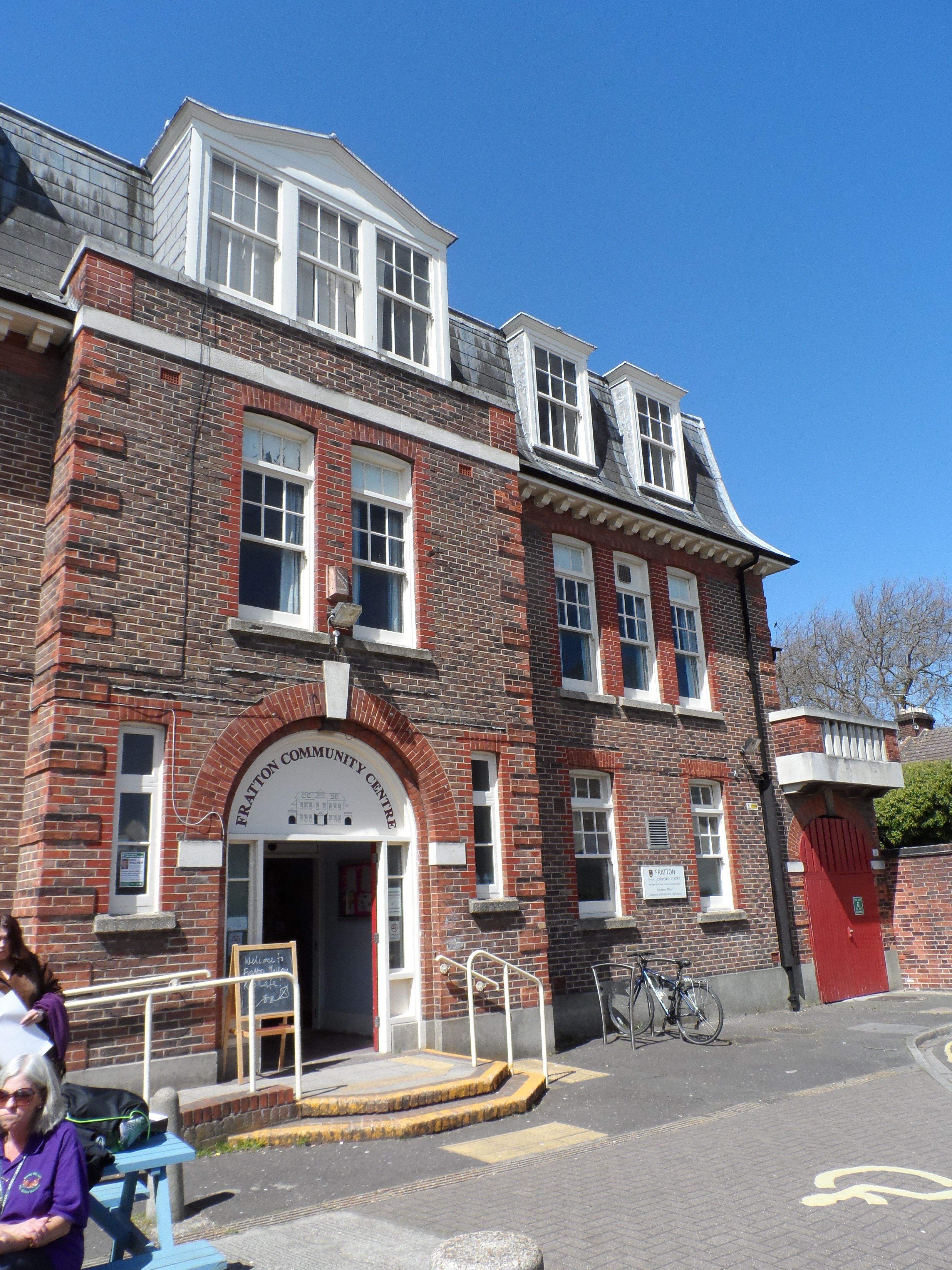 Meetings are held at
 The Fratton Community Centre
Trafalgar Place.
Off Clive Rd, Portsmouth
PO1 5JJ
at 7.00pm usually on the first Thursday of the month.
Click here for a MAP
Busses 14 18 21 and 25 stop at St Mary's Church, about 2 minutes walk away.